Advocacy

Advocacy + Public Policy

Art Therapy in Indiana Policy

IndiATA advances professional recognition, title and practice protection, workforce inclusion, and an Indiana licensure pathway for qualified art therapy practice.

Plain-language status

Where things stand now

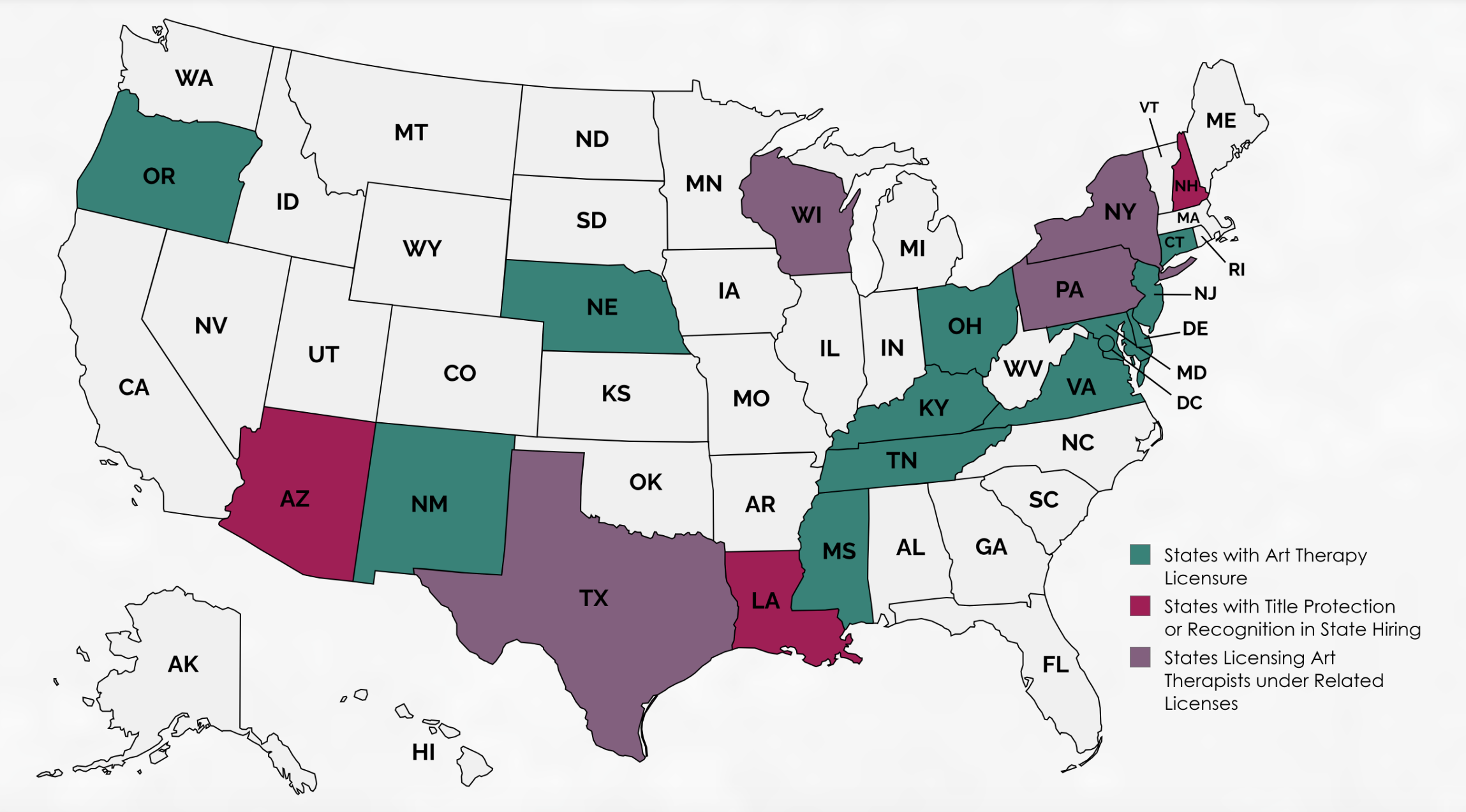
Indiana does not currently license art therapists as a distinct profession.

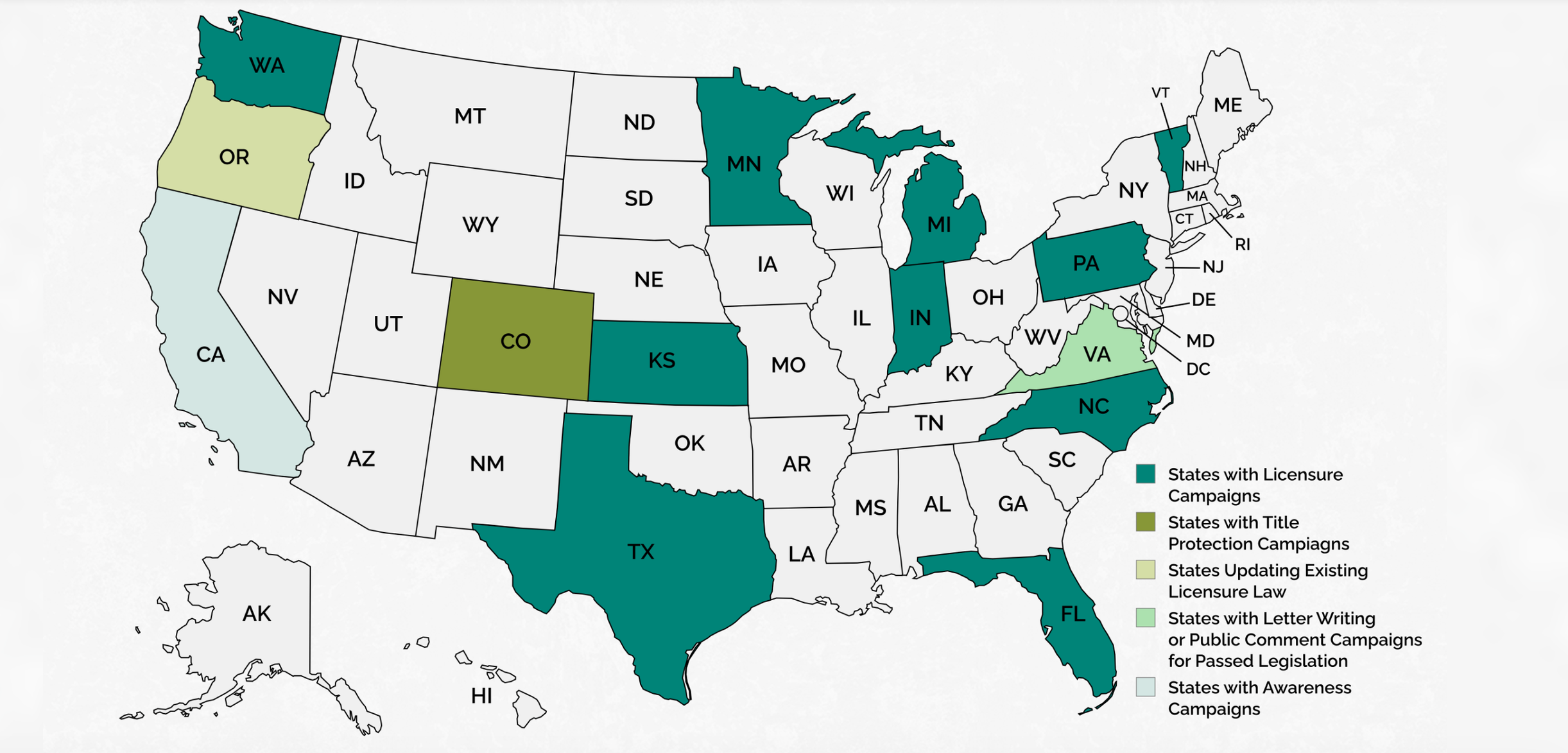
IndiATA is pursuing an art therapy-specific licensure pathway through the Medical Licensing Board of Indiana, with profession-specific representation through an Art Therapy Advisory Council.

That pathway has already appeared in Indiana legislation. SB 338 in 2023 proposed licensure of art therapists and art therapist associates through the Medical Licensing Board of Indiana and passed the Indiana Senate 47–2 before being referred to House Public Health.

There is not currently an art therapy license available to apply for in Indiana.

For students and emerging professionals, this means that graduating from an art therapy program or earning an ATCB credential does not currently create an Indiana art therapy license. Some art therapists independently qualify for another professional license, but that is separate from state recognition of art therapy itself.

Through statewide liaison discussions regarding professional regulation, IndiATA was advised that art therapy would not be placed within the Behavioral Health and Human Services Licensing Board. The licensure pathway pursued by IndiATA is therefore through the Medical Licensing Board of Indiana, consistent with the structure advanced in SB 338.

Why this matters now

Indiana already has a significant mental health workforce shortage. All 92 Indiana counties contain federally designated mental health provider shortage areas.

Art therapists are already educated, clinically trained, nationally credentialed, and working in Indiana across mental health, healthcare, education, rehabilitation, community, and independent-practice settings.

Art therapy licensure would not create a new profession. It would give Indiana a state-level pathway to recognize an existing mental health profession, establish clear qualifications and accountability, and make it easier for qualified art therapists to be identified in workforce planning, hiring, referral, provider classification, and systems of care.

What happens next

The legislative language already exists. The regulatory pathway has precedent.

The immediate need is legislative authors and sponsors and visible support from art therapists, students, educators, employers, healthcare and mental health professionals, community partners, and others who want to help move art therapy licensure forward.

For students

You are entering an established profession with national education and credentialing standards. Indiana has not yet created the state licensure structure specific to art therapy.

IndiATA is working to change that.

Students deserve to know where the legislation stands, what pathway is being pursued, what previous bills accomplished, and what comes next.

Help move the next bill forward

Indiana art therapy licensure needs legislative authors, sponsors, and visible support.

IndiATA is seeking legislative authors, sponsors, coauthors, cosponsors, professional supporters, testimony, outreach, and coalition support for the next art therapy licensure bill.

Interested in sponsoring, supporting, or helping advance art therapy licensure legislation in Indiana?

Contact IndiATA →
IndiATA licensure position

Art Therapy Licensure in Indiana

IndiATA supports establishing art therapy-specific licensure with title and practice protection in Indiana.

Licensure can create a defined professional framework for education, clinical training, scope of practice, accountability, and public identification of practitioners qualified to provide professional art therapy.

Position

IndiATA supports establishing art therapy as a licensed mental health profession in Indiana, with defined education and clinical training requirements, title and practice protection, professional accountability, and a clear pathway from graduate training to independent practice.

Licensure framework

A clear professional pathway for Indiana

Associate or provisional licensure for qualified graduates completing required post-degree supervised clinical experience.

Full professional licensure following required education, clinical experience, supervision, and examination or credential requirements.

Legal definitions of art therapy, art therapist, and the professional scope of art therapy practice.

Title protection connecting professional use of “art therapist” and “art therapy” to defined qualifications.

Practice protection establishing the qualifications required to represent services as professional art therapy.

Education and clinical standards aligned with nationally recognized art therapy education and credentialing standards.

Reciprocity and endorsement pathways for qualified art therapists licensed in other jurisdictions.

Transition provisions addressing qualified art therapists already practicing in Indiana when licensure is established.

Why recognition matters

Professional definition affects the systems around the profession

Recognition gives people and institutions a consistent way to understand what art therapy is, who is qualified to provide it, and where the profession belongs within Indiana’s mental health infrastructure.

Clear professional language also supports collaboration by making the preparation, purpose, and scope of different mental health, healthcare, educational, recreational, rehabilitation, creative, and community services easier to understand.

Public clarity

A protected professional title helps clients and families understand the distinction between professional art therapy and other art-based, creative, recreational, educational, or wellness services.

Workforce recognition

Defined professional status supports accurate inclusion of art therapists in workforce data, hiring language, job classifications, and planning.

Employer + referral clarity

Employers, healthcare systems, schools, agencies, internship sites, and referring professionals gain a consistent basis for identifying qualified practitioners.

Education to practice

A defined associate-to-full-license pathway can connect graduate education, supervised post-degree experience, and independent professional practice.

Professional accountability

Licensure can create state-level standards for qualifications, professional scope, and regulatory accountability alongside national art therapy credentialing.

Access infrastructure

State recognition can provide a foundation for clearer provider classification, reimbursement pathways, state hiring recognition, and integration across systems of care.

Regulation + Credentials

Licensure and Credentialing Are Different

State Licensure

A professional license is created and regulated by state law. It establishes legal requirements for a licensed profession within that jurisdiction.

Depending on the law enacted, licensure can define professional titles, scope of practice, qualification requirements, supervision, independent practice, renewal, and regulatory accountability.

Indiana does not currently have an art-therapy-specific license.

ATCB Credentials

The Art Therapy Credentials Board administers national professional art therapy credentials and establishes education, supervised experience, and credentialing requirements.

The current credential pathway includes the ATR-P for qualified practitioners completing required supervised post-graduate experience and the ATR after applicable education and supervised professional experience requirements are met.

National credentialing establishes art-therapy-specific professional standards. State licensure establishes legal recognition within a state.

Professional accountability

The profession carries its own standards

Ethics + credentialing

AATA’s Ethical Principles provide profession-specific ethical guidance. ATCB credentialing establishes national standards for professional art therapy preparation and credentialing. Art therapists who also hold another professional license remain accountable to the requirements of that license.

Art media and creative process are part of the clinical responsibility

Art therapy preparation integrates psychological theory, human development, therapeutic relationships, creative process, art media, imagery, meaning-making, assessment, treatment planning, adaptation, ethics, and professional scope.

Policy intersections

Where art therapy intersects Indiana systems

01

Health + Behavioral Health

Medical care, behavioral health, integrated care, substance-use treatment, rehabilitation, rural health, maternal health, and related clinical systems.

02

Workforce

Employer language, education pipelines, professional classification, workforce planning, visibility, recruitment, and retention.

03

Children + Families

Schools, developmental care, child welfare, caregiver support, family systems, communication, identity, and community-based services.

04

Community Living + Access

Disability services, neurodivergence, aging, communication access, autonomy, adaptive creative access, caregiver support, and participation.

05

Recovery + Justice + Veterans

Substance-use recovery, forensic behavioral health, reentry, veteran-serving systems, transition, grief, and family reintegration.

06

Community + Cultural Systems

Collaboration across mental health, healthcare, education, arts, community, civic, and cultural systems.

Provider recognition

Licensure and reimbursement are connected, but they are not the same

Professional licensure does not automatically create Medicaid or private insurance reimbursement. Payer recognition involves additional laws, regulations, contracts, provider classifications, and coverage rules.

Indiana Health Coverage Programs require providers to enroll under established provider classifications, types, and specialties. Art therapy is not currently identified as its own IHCP behavioral-health provider specialty.

State recognition of art therapy can provide clearer regulatory infrastructure for later consideration of provider classification, reimbursement, state hiring, and other system-level recognition.

Licensure establishes professional regulation. Reimbursement requires additional payer recognition.

Legislative history

Indiana has a history of art therapy legislation

2012
Proposed restricting use of the registered art therapist title to individuals maintaining the specified national art therapy credential and included provisions addressing professional art therapy practice. The proposal did not become law.
2013
An art therapy regulatory proposal was introduced and referred to the House Committee on Employment, Labor and Pensions. It did not become law.
2014
Proposed professional art therapist licensure through the Indiana Professional Licensing Agency and Medicaid reimbursement for certain art therapy services. The bill did not advance from committee.
2020
Companion proposals addressed licensure of professional art therapists and art therapist associates and Medicaid reimbursement for specified art therapy services. Neither became law.
2021
Proposed licensure of professional art therapists and art therapist associates through the Behavioral Health and Human Services Licensing Board and included Medicaid reimbursement provisions. The proposal did not advance from committee.
2022
SB 317 proposed certification of professional art therapists and art therapist associates and related Medicaid reimbursement. HB 1239 proposed licensure of art and music therapy professions and related Medicaid provisions. Neither became law.
2023
Multiple 2023 proposals addressed art therapy regulation. SB 338 proposed licensure of art therapists and art therapist associates through the Medical Licensing Board of Indiana, established an Art Therapy Advisory Council, and provided title protections. The bill passed the Indiana Senate 47–2 and was referred to House Public Health. No art therapy licensure proposal became law.
SB 338 Senate authors + coauthors Vaneta Becker · Jean Leising · J.D. Ford · Fady Qaddoura · Stacey Donato · Michael Crider · Shelli Yoder · Michael Young
SB 338 House sponsor + cosponsors Christopher Judy · Cindy Ledbetter · Edward Clere · Mitch Gore

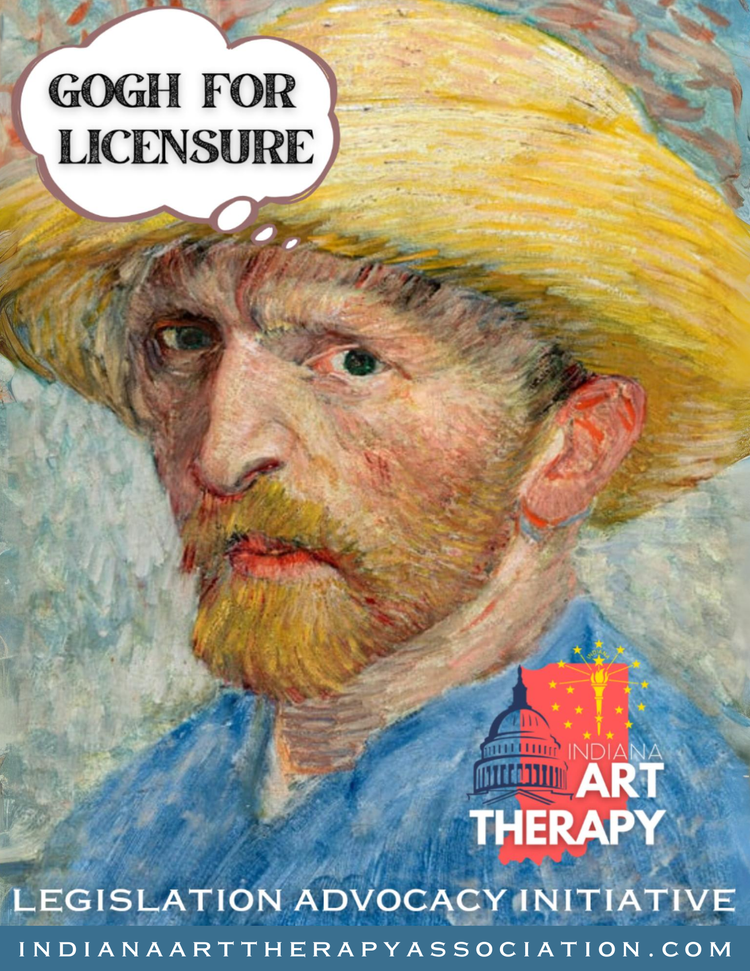
Gogh for Licensure

The IndiATA Advocacy Toolkit

Practical resources for promoting art therapy at the local, state and federal levels. Download it, adapt it for your audience, and bring it with you when you write.

IndiATA Advocacy Toolkit cover: Van Gogh self-portrait with the caption Gogh for Licensure, Legislation Advocacy Initiative.
QR code that opens the IndiATA Advocacy Toolkit.
Scan to open the toolkit on a phone.

Use it to

  • Understand the legislative process and the policy questions that affect art therapy
  • Communicate with lawmakers using talking points, draft emails and phone scripts
  • Share your story with guidance that respects confidentiality and ethics
  • Build coalitions with allied professionals and community organizations
  • Host events from templates for workshops, town halls and lobby visits
  • Reach media with press release and social media templates
  • Track outcomes on sheets for contacts, commitments and follow-ups

Continue from here

Advocacy connects people to action

Art therapists + members

Membership →

Legislators + public officials

Contact IndiATA →

Employers + professional partners

Art Therapy in Indiana →

People seeking care

Find an Art Therapist →